My Floating Shelf Tilted in a Day — Here's What Held 40 lb
How I built oak floating shelves that hold 40 lb with no brackets — the French-cleat core, hidden rod spacing, and the stud mistake that nearly dropped one.
TL;DR
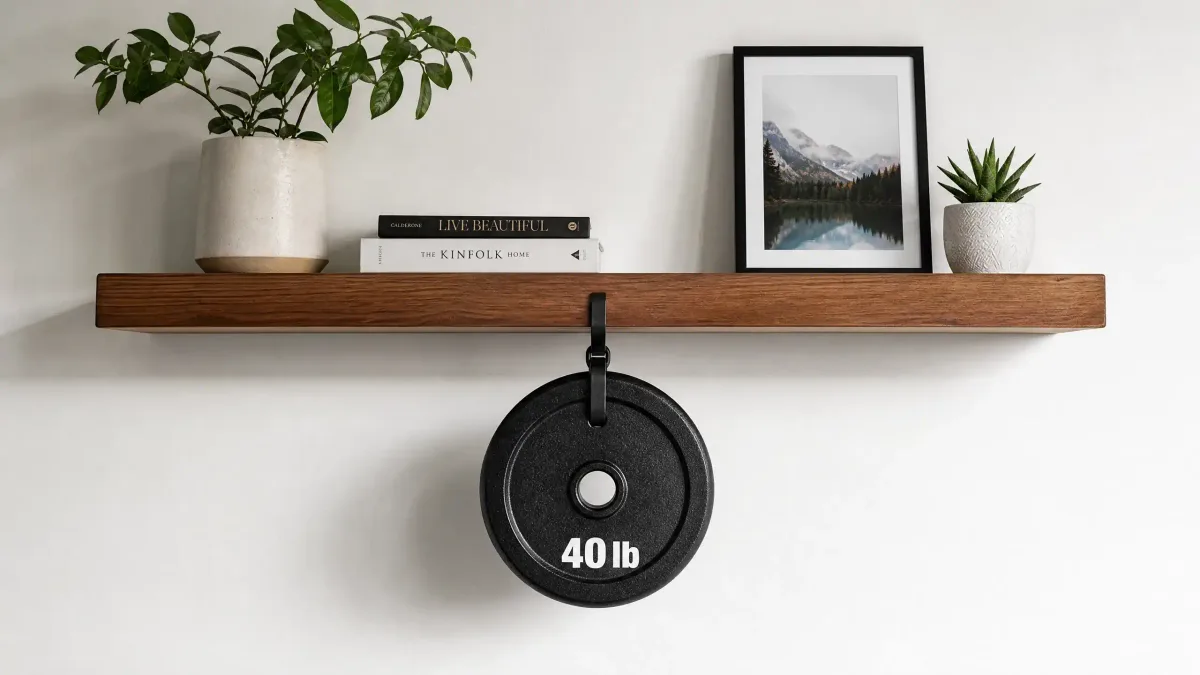
Floating shelves sag when the hidden support is too thin or the load sits past the bracket. I built three 30-inch oak shelves with a 3/4-inch plywood French-cleat core and two 1/2-inch steel rods in studs 16 inches apart. Each holds about 40 lb with no visible bracket and no sag after six months. The one failure: my first rod landed in drywall between studs, and the shelf tilted within a day — anchoring into studs, not just drywall, is non-negotiable.
Three days after I hung the first shelf, it was tilting. Not dramatically — maybe five degrees — but enough that a stack of paperbacks kept sliding toward the wall every time someone walked past. I’d used the kit that came in the box, two short keyhole plates rated for 20 lb, loaded with maybe 15 lb of books. That failure is the entire reason the three oak shelves in our living room now look nothing like what I originally planned, and why they’ve held 40 lb apiece for six months without a hint of sag.
Why the first shelf failed
The kit brackets were rated for 20 lb, but they landed in drywall between studs because I measured once and trusted the markings. The drywall anchors slowly pulled, and the shelf pivoted on the single stud it did catch. Lesson learned in the most annoying way: floating shelves live or die on where the load transfers to the wall, not on the pretty oak face.
The build that worked
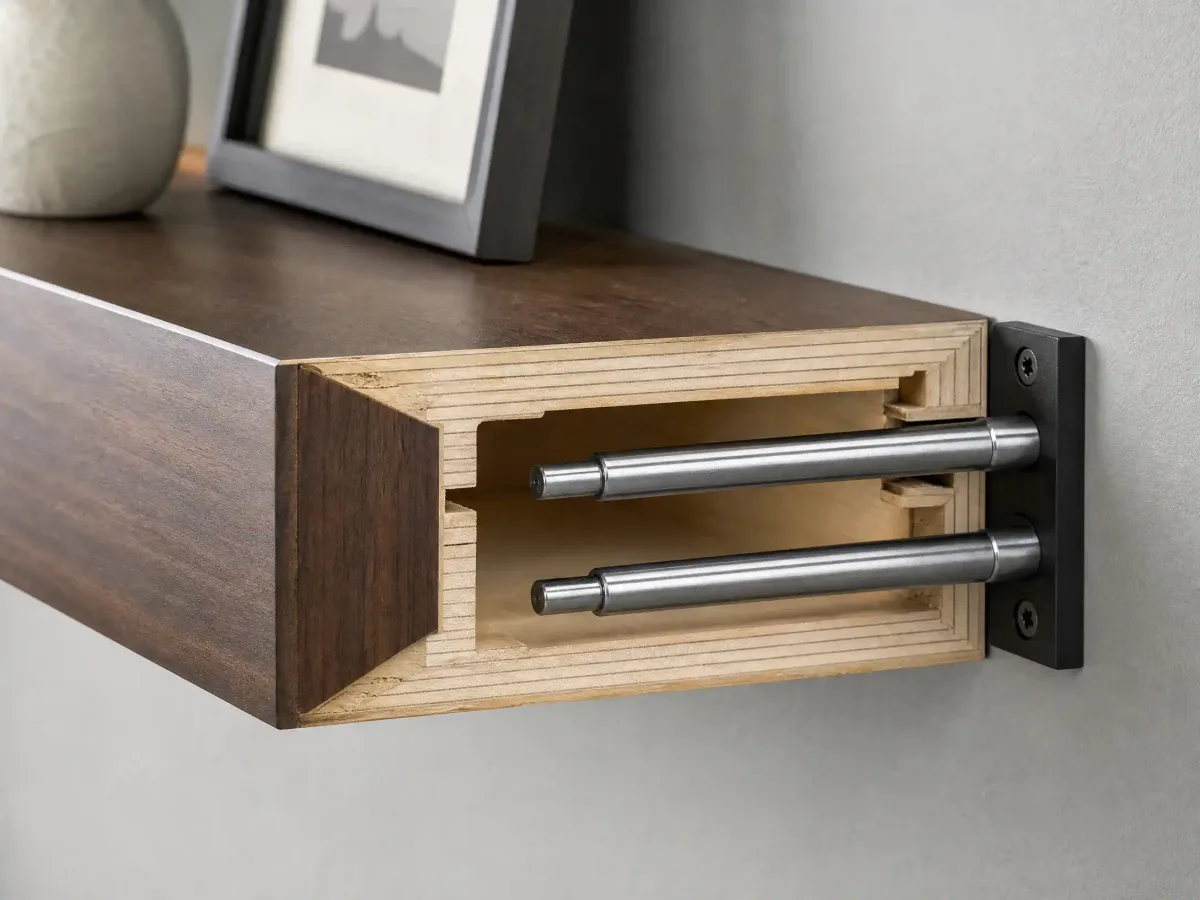
Each shelf is a 30-inch box: a 3/4-inch Baltic birch plywood core shaped with a channel for two 1/2-inch steel rods, wrapped in a 1/4-inch red oak face glued and pinned on. The rods are the real support; the oak is the look.
Step 1 — Find the studs, mark both rod points
I used a stud finder, then confirmed with a small finish-nail test. The two rods sit 16 inches apart (standard stud spacing) so each anchored into a stud. For a 30-inch shelf this puts the load close to the wall on both ends.
Step 2 — Drill the wall rods
I drilled a 1/2-inch hole into each stud about 2-1/4 inches deep and tapped the steel rods in with a rubber mallet so they stuck out about 1-1/2 inches. They need to seat fully into the stud, not just the drywall — that is the whole point.
If you cannot hit two studs 16 inches apart where you want the shelf, do not cheat with drywall anchors. Screw a 1x6 backing board into two or three studs, then hang the rods from the board. A backing board spreads the load and saved my second attempt in a spot where the studs were 24 inches apart.
Step 3 — Build the shelf core
The plywood core has a 9/16-inch-wide channel routed along its length at the two rod positions, deep enough that the rods disappear inside when the shelf slides on. I glued the oak face and end caps, clamped overnight, then sanded to 220 grit and finished with three coats of wipe-on poly.
Step 4 — Slide and level
The shelf slides onto the rods and rests on the French-cleat shoulder inside the core. I checked it with a level, then loaded books from the center outward so the weight sat over the rods, not past the ends.
How it has held up
Six months in, with about 40 pounds of books and a ceramic planter on the longest shelf, there is no visible sag and no tilt. The plant shelf — which I did hang on a backing board because the studs were off-spacing — has been just as solid.
The upgrade I’d make next time
I would buy a better stud finder first. The $12 magnetic one I used missed a stud by half an inch, which is exactly how the first shelf failed. A $30 electronic finder with a deep-scan mode would have saved the rebuild. The plywood core, the rod spacing, the oak face — none of that changes next time.
Key Takeaways
- Sag comes from weak internal support or load past the bracket — build a rigid core.
- Two steel rods into studs 16 inches apart held 40 lb per 30-inch shelf.
- Drywall alone will not hold a loaded floating shelf; hit studs or use a backing board.
- A French-cleat plywood core hides the rods and keeps the shelf from twisting.
Frequently Asked Questions
How much weight can a floating shelf hold?
Why did my floating shelf start to tilt?
What wood is best for floating shelves?
Do I need a French cleat inside the shelf?

Malik Areeb Ahmed is a contributor at Aesthetic Vibes, covering home improvement and DIY projects.